The 2026 Climate Technology Progress Report is out now!
🌊 As one of the world's largest carbon sinks, the ocean absorbs substantial amounts of human-caused carbon dioxide. Yet warming waters and changes in ocean chemistry are placing this critical function under increasing pressure, potentially weakening the ocean's ability to store carbon and support climate stability in the future.
Three Helmholtz centres contribute to the UN’s 2026 Climate Technology Progress Report: GEOMAR Helmholtz-Zentrum für Ozeanforschung Kiel, Alfred-Wegener-Institut, Helmholtz-Zentrum für Polar- und Meeresforschung and Hereon.
💡 The report highlights Ocean Carbon Intelligence, a framework that connects ocean science, monitoring technologies, data infrastructure and analytical tools to improve understanding of ocean carbon dynamics and support evidence-based climate action.
Hereon’s scientist Dr. Bryce Van Dam was responsible for the report chapter on technologies for monitoring, managing and enhancing the ocean carbon sink together with Prof. Dr Christopher Pearce from the UK’s National Oceanography Centre (NOC). The chapter highlights the growing interest in ocean-based climate protection approaches – such as the restoration of blue carbon ecosystems or marine approaches to carbon dioxide removal. Prerequisites include a strong scientific basis, transparency, environmental standards and effective governance.
The report was published by the UNEP Copenhagen Climate Centre (UNEP-CCC) in collaboration with the United Nations Climate Technology Centre & Network (CTCN) and the Technology Executive Committee (TEC) of the United Nations Framework Convention on Climate Change. Dr. Judith Ziegler from GEOMAR Helmholtz-Zentrum für Ozeanforschung Kiel, one of the lead authors, will present the report at a UNEP event during the #COP31 in Antalya.
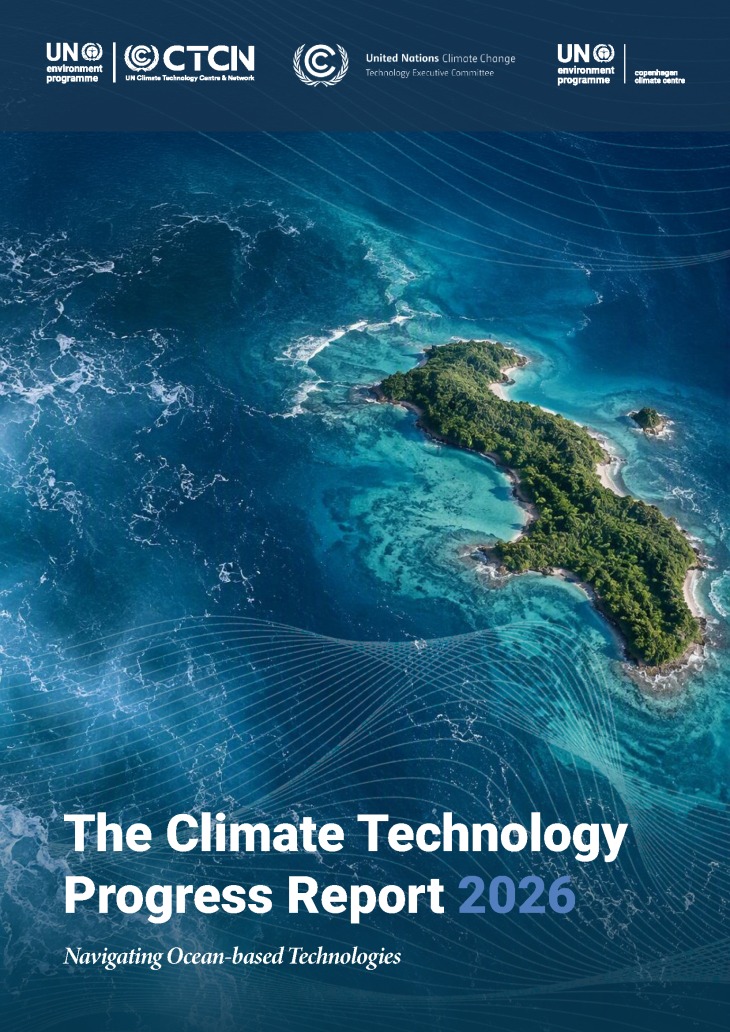
Cover of The 2026 Climate Technology Progress Report.